We value your privacy.
Airtrek AI uses essential cookies for the app to work and optional analytics cookies (Google Analytics) to understand how people use the site. We do not sell your data. Read more in our Privacy Policy.

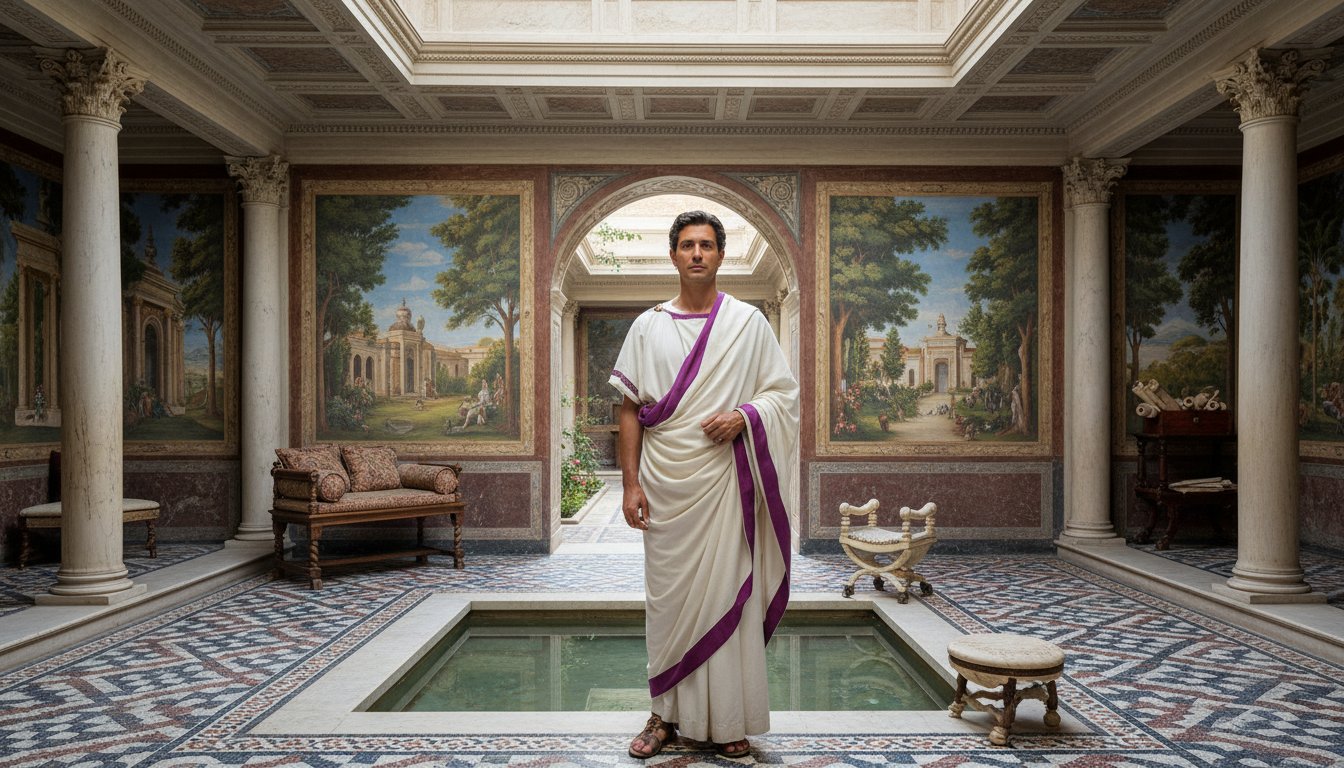
Quintus Aelius Severus
Roman Senator, 110 CE
Explore Imperial Rome With Airtrek
Step into Imperial Rome, 110 CE, under Emperor Trajan. Talk with a senator, a merchant, a noblewoman, a Vestal Virgin. Explore the past, don't just read it.
The year is 110 CE. Imperial Rome is at the height of its power under Emperor Trajan, who will soon launch the campaigns that push the empire to its greatest territorial extent. The Senate still meets. The arenas still fill. The Vestal Virgins still tend the sacred flame that protects the city. And the people who live here, senators, merchants, priestesses, physicians, see completely different cities, depending on who they are.
Airtrek puts you inside that world. You arrive in Trajan's Imperial Rome, see the setting around you, and talk with the people who live there.
The Imperial Rome you arrive in
Imperial Rome in 110 CE is the largest city in the Mediterranean world , a metropolis of perhaps one million people, drawn from every corner of the empire. Trajan has been emperor for twelve years and is popular. He is building his famous forum and will soon complete the column that commemorates his Dacian campaigns. The Senate functions, but real power rests with the emperor. The grain dole feeds the poor. The arenas entertain the crowds. The temples anchor the city's religious life.
This is not the Rome of Julius Caesar, that was 150 years earlier, during the Republic. This is not the Rome of the fall, that is centuries away. This is Imperial Rome at its peak, and the people you meet are living through that peak.
Who you can talk with
Quintus Aelius Severus
Roman Senator
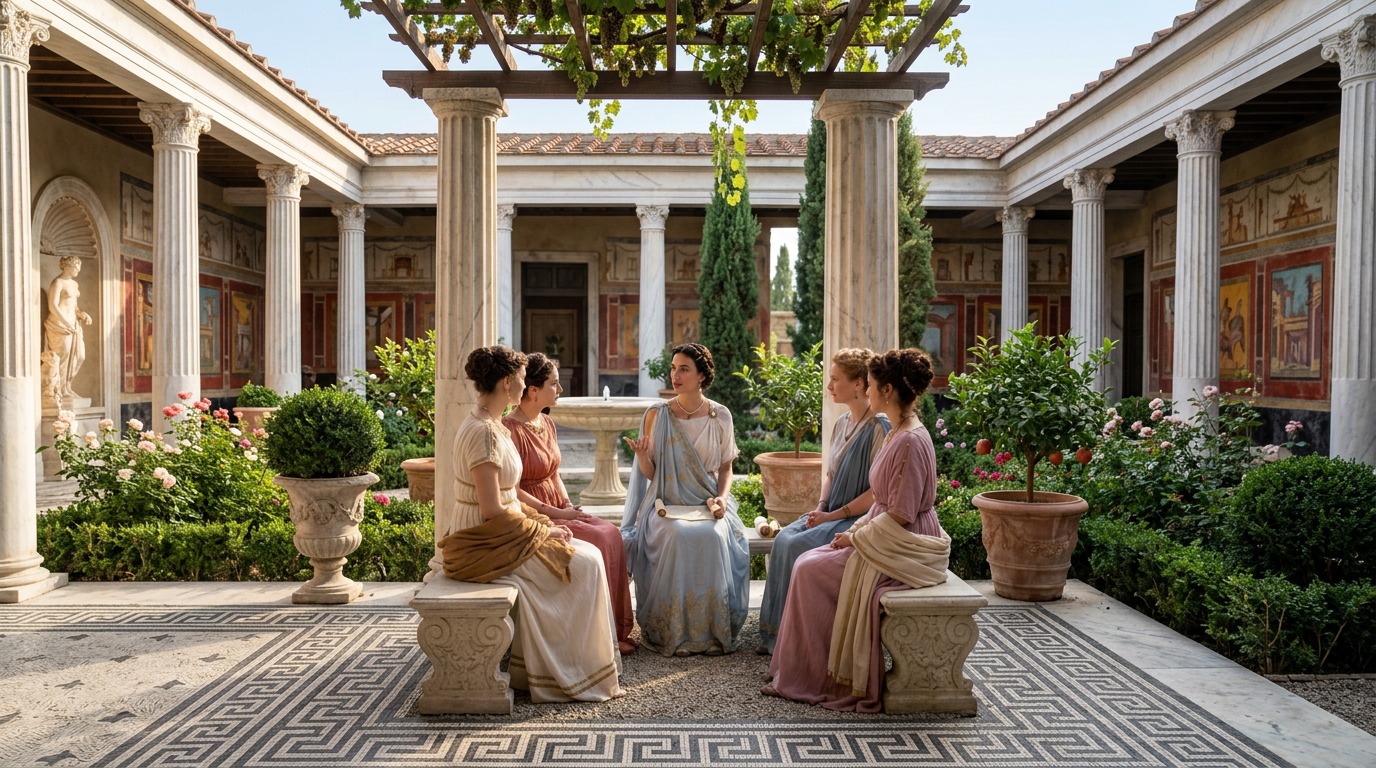
Julia Petronia
Roman Noblewoman & Hostess
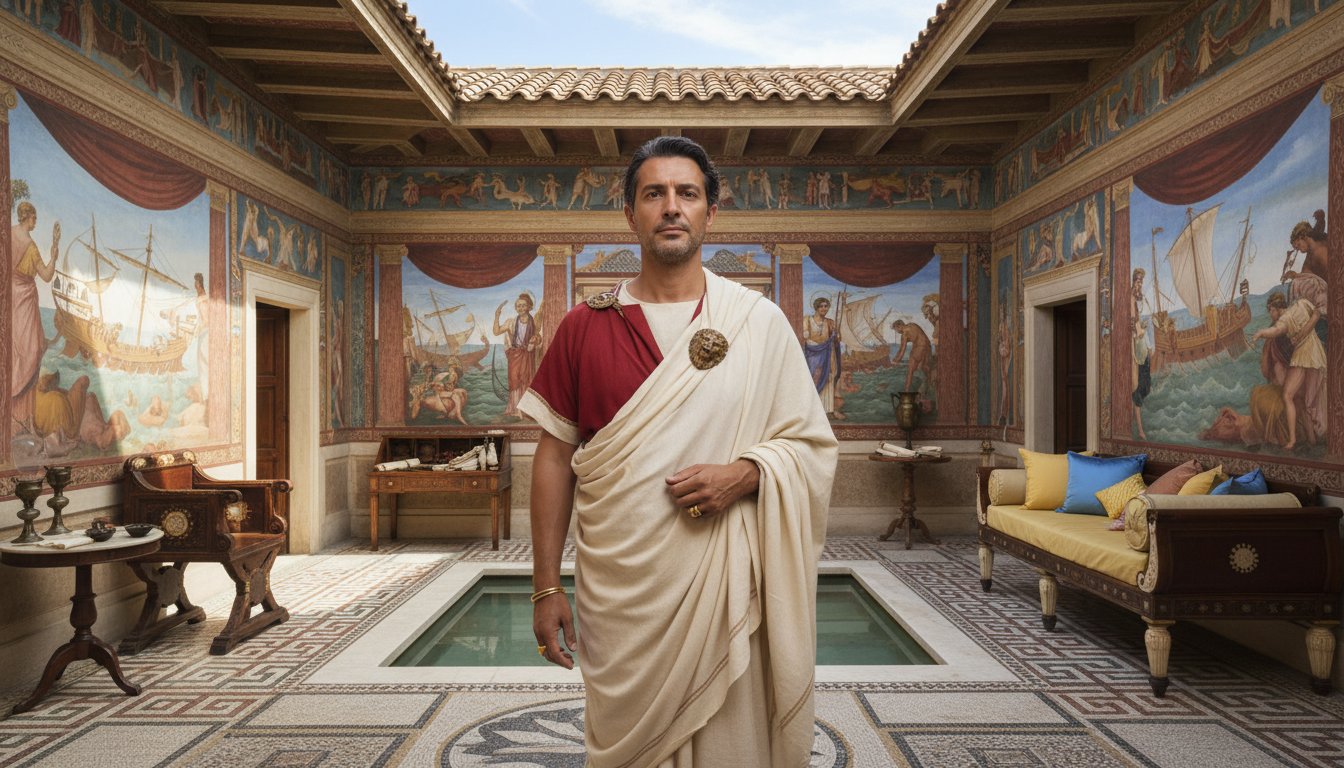
Gaius Petronius
Wealthy Merchant
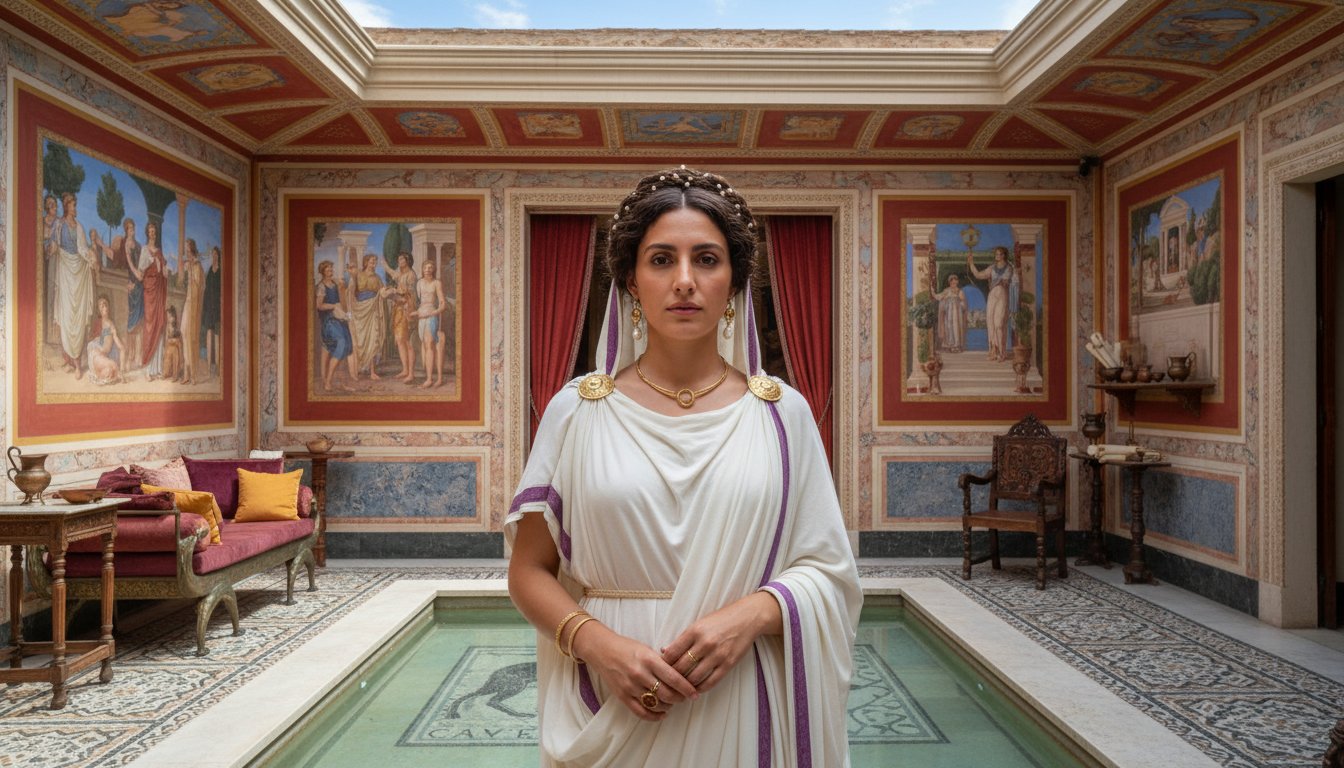
Livia Sabina
Priestess of Vesta
A question, three answers
Ask Quintus, Julia, and Gaius the same question, "What do you think of the emperor's power?", and you get three different Imperial Romes.
Quintus, the senator, sees imperial power as an instrument whose morality depends on the wielder: a blade under Domitian, a foundation under Trajan. Julia, the noblewoman, sees it as the weather she hosts her guests in, it decides whether a woman may read Greek philosophy without scandal. Gaius, the merchant, sees it as the ceiling he hits every day: "I'm richer than half the Senate, but I can't hold the highest offices because I'm equestrian, not patrician. The emperor's power is the ceiling I hit every day, no matter how much I've built."
Three people. One city. One question. Three Imperial Romes. This is what Airtrek is built for, not one summary of the past, but a conversation inside it. (Read a full worked example in I Asked a Poet, a King, and a Queen What Survives After Death.)
What we know, and what we don't
These characters are not real historical individuals. Quintus, Julia, Gaius, and Livia are reconstructions of types of people who plausibly lived in Imperial Rome under Trajan, built from research into Roman social structure, politics, domestic life, religion, and the arena in the early 2nd century CE.
The setting, 110 CE, Trajan's reign, the Forum, the arenas, the Vestal Virgins, the grain dole, is well-evidenced. The characters' inner lives and private conversations are reconstructed. Where the record is uncertain, the characters say so rather than inventing confident answers. See History, Interpretation, and AI in Airtrek.
Learn more
Immersive History →
What immersive history is and who it's for.
AI Historical Figures →
The difference between a static chatbot and a multi-perspective experience.
How Airtrek Works →
Conversations, voices, portraits, memory, and limitations.
Historical Accuracy →
How Airtrek handles evidence, anachronism, and creative reconstruction.