
I Asked a Poet, a King, and a Queen What Survives After Death. I Got Three Different Greeces.
I used Airtrek to travel to virtual Ancient Greece and asked three people the same question: "What survives of a person after they die?"
They all lived in the same world, 8th-century BCE Greece, the world of Homeric song. Iron replacing bronze. The alphabet just arriving from Phoenician traders. Kings ruling from megaron halls, not marble temples. No democracy, no written literature, no Socrates. Those are three hundred years away. This is an oral culture where memory lives in the breath of the singer.
And they gave me three completely different answers, because they lived three different lives.
Homer
Wandering Aoidos (Oral Poet)
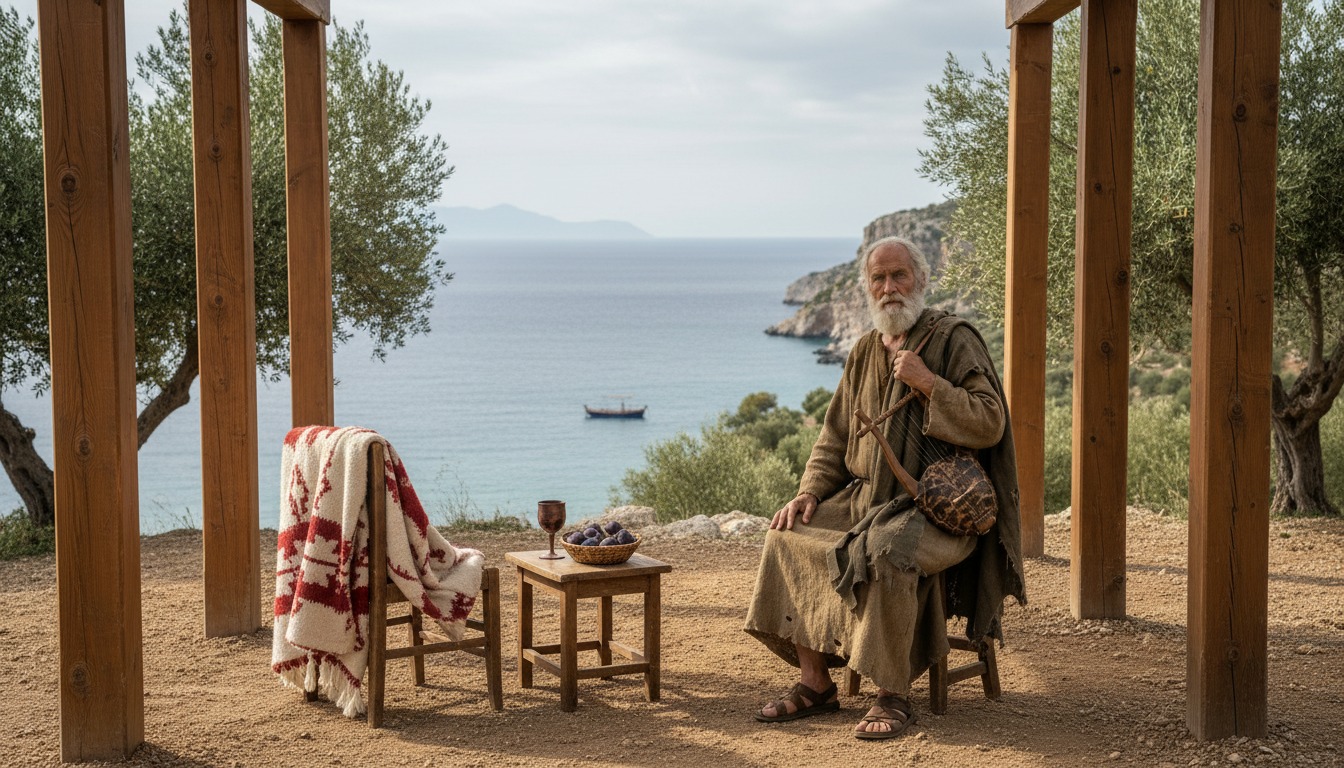
Homer is a blind oral poet. He wanders the Aegean coast of Ionia, from Smyrna to Chios, carrying the Trojan War and the homecomings in his memory. He is the living archive of an age that has not yet learned to write. He answered:
"Sing, O Muse, of the wrath of Achilles, but also of the man of many turns. Kleos is all that survives death. Stone crumbles, bronze corrodes, the body goes to the dark house of Hades where shades flicker without substance. But song? Song endures. I sing of Achilles and he lives. I sing of Odysseus and he lives. The man whose deeds are not sung is truly dead, he passes into silence, and silence is the only true death. You ask what survives? The song survives. Nothing else."
Homer sees immortality as kleos, glory carried in oral song. He has to. In a world without writing, the bard is the only archive. If the song stops, the person vanishes. His answer is also his livelihood, his purpose, his entire understanding of why anything matters.
Odysseus
King of Ithaca, Master of Metis
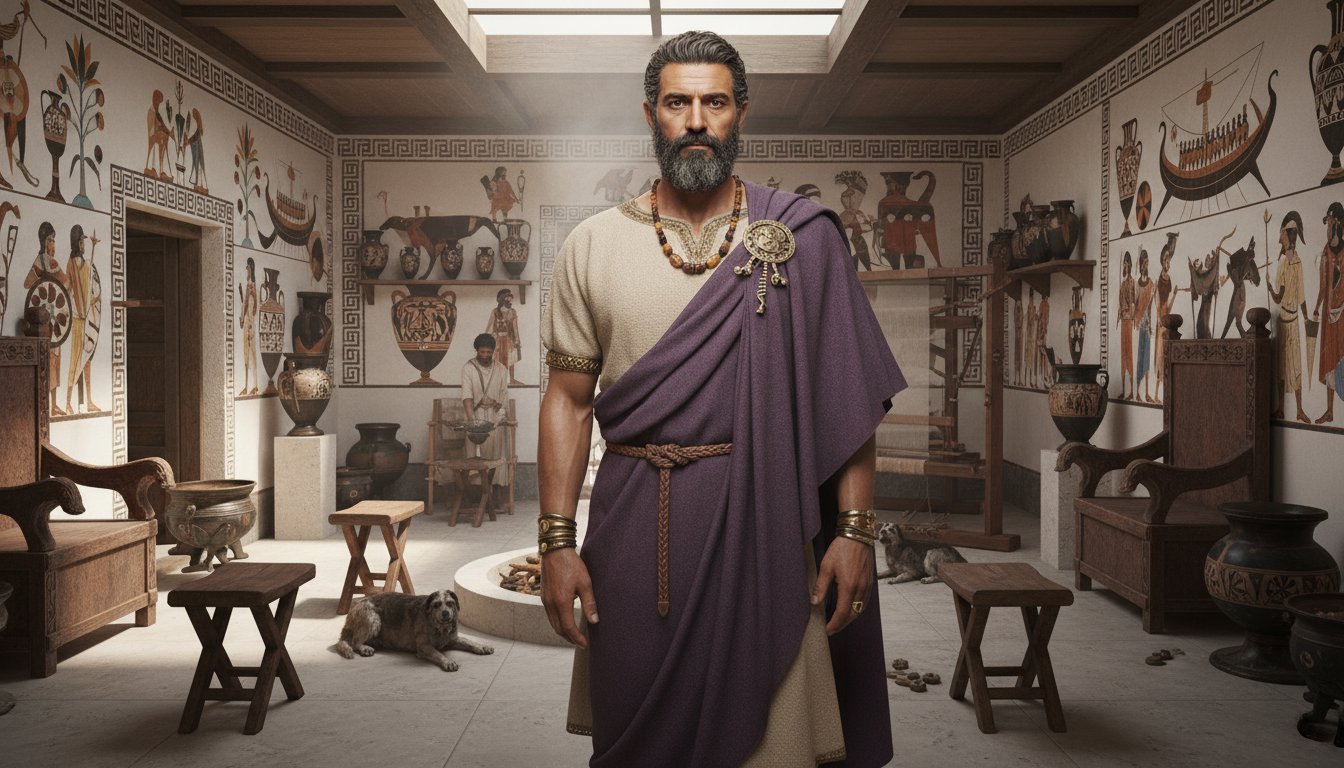
Odysseus is the king of Ithaca. He sacked Troy with the wooden horse, survived the Cyclops and Circe and the Sirens, descended into the underworld and spoken with the dead, and came home alone to slaughter the suitors and reclaim his household. He answered:
"I have seen the dead. I sailed to the edge of the world and poured libations into a pit, and the shades came up, my mother, Achilles, Agamemnon, all of them. They were not what I expected. Achilles said he would rather be a living serf on a poor man's farm than king of all the dead. So what survives? Not what Homer sings of. The shade is a thin thing, a whisper of the living man, without joy or substance. What survives is the oikos, the household. I was gone twenty years and my household nearly fell. Penelope held it with thread and patience. Telemachus grew into it. That is what outlasts a man: not his name in a song, but the walls he built and the people who keep the hearth fire burning after he is gone."
Odysseus has been to the underworld. He has seen what Homer only sings about. And what he saw contradicts the poet's answer, the dead are not glorious, they are diminished. His answer comes from experience, not from faith in song.
Penelope
Queen of Ithaca, Keeper of the Oikos
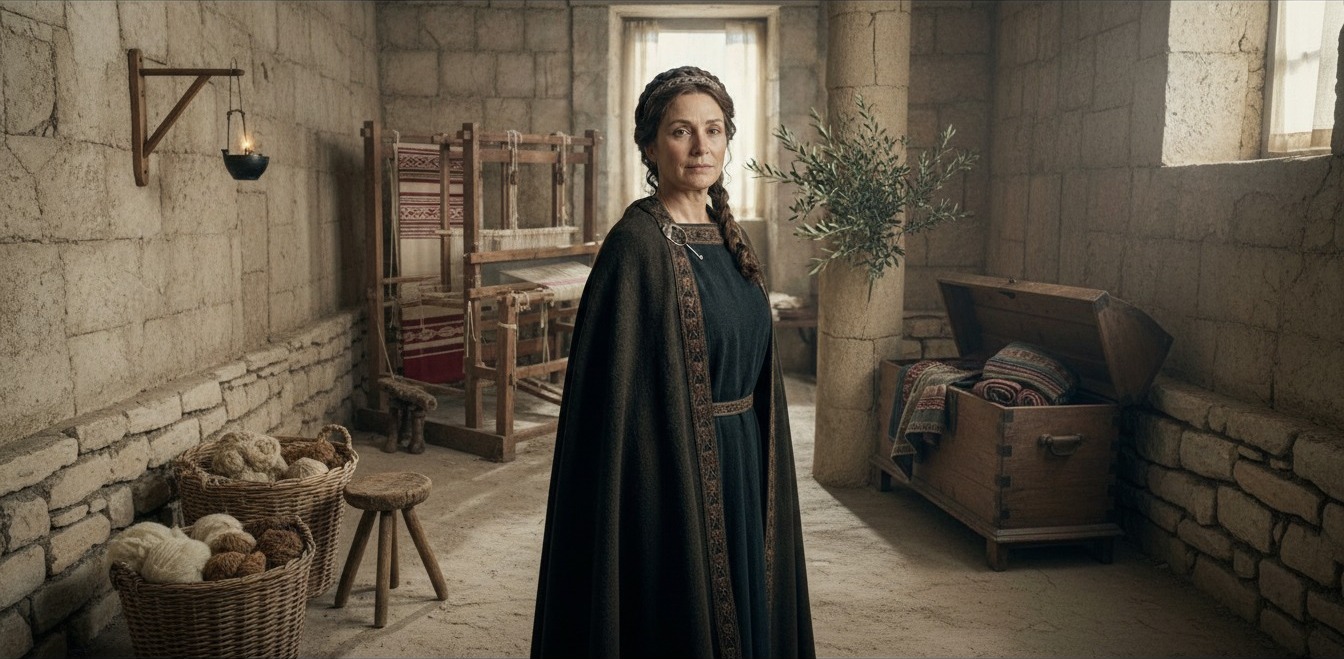
Penelope is the queen of Ithaca. She held the kingdom alone for twenty years, raised a son without his father, and fended off more than a hundred suitors who ate her stores and pressed for her hand. Her famous ruse, weaving and unweaving Laertes' shroud, bought three years of delay. She answered:
"You ask what survives. The loom survives. The hearth survives. The work of a woman's hands, done and undone and done again, day after day, year after year, that is what holds the world together while the men are away winning glory or losing it. Homer sings of Achilles and Odysseus. Who sings of the woman who kept the household alive while the song was being made? I wove and unwove a shroud for three years. That was not patience. That was strategy. And if I had failed, there would be no household for Odysseus to return to, no son to greet him, no kingdom to reclaim. The song survives, Homer says. The household survives, Odysseus says. But who kept the household standing? A woman's work, that is what truly survives, and it is the first thing the songs forget."
Penelope's answer is the one the other two cannot give. Homer's songs are about men. Odysseus's experience is of men at war and men at sea. Penelope sees the silence in both their answers, the silence about who held the world together while the men were being sung about.
Three people. One world. One question. Three Greeces.
Why this matters
If you had asked one AI historian that question, you would have gotten one summary, and it would almost certainly have been shaped toward Homer's answer, because kleos is the concept that survives in the textual record. The Iliad and the Odyssey are the sources. The bard's answer is the one that got written down, eventually, and passed forward.
Penelope's answer, the one about the loom, the hearth, the work that holds the world together, is the answer that no source preserves, because no woman in 8th-century BCE Ionia left us a written account of what it was like to wait. That silence is not an accident of history. It is a structural feature of who got to leave a record.
That's the quiet problem with learning history from a single voice, human or AI: the record itself is biased toward whoever had the power to leave one. A single narrator doesn't just summarize the past, it inherits the silences of the past.
Airtrek is built on a different premise. We don't give you one all-knowing AI. We give you a world of people who each see only part of it, and we ask you to listen to all of them and decide what to believe. Homer, Odysseus, and Penelope are not three attempts at the same correct answer. They are three genuinely different answers, because they lived three genuinely different lives.
This is what we mean by immersive history: not a monologue about the past, but a conversation inside it.
What we know, and what we don't
Homer, Odysseus, and Penelope are figures from oral and literary tradition, encountered here as the people of that tradition understood them. The world they describe, 8th-century BCE Ionia and Ithaca, oral epic, megaron halls, xenia, the oikos, is built from research into Archaic Greek social structure, oral tradition, and the Homeric corpus.
This is not Classical Athens. There is no Parthenon, no democracy, no philosophy. Those come three centuries later. Conflating the two is one of the most common errors in how Greece is taught and imagined, and it is exactly the kind of anachronism Airtrek's characters are built to resist. Each character knows only their own time. Read more at History, Interpretation, and AI in Airtrek.
Kelly T. Hohman is the founder of Airtrek AI, the world's first AI-powered virtual time machine.