
The Characters Are Not Avatars. They Live in the Scene. Here's Cosimo de' Medici Giving Me a Tour.
Most "AI characters" you meet online are avatars. A picture, a name, and a chat window bolted on top of a language model. The model does not know where it is. It does not know what is behind it. It does not know who is standing next to it. You could put the same chatbot in a Roman forum, a medieval market, or a space station, and it would say the same things, because it is not in any of those places.
Airtrek characters are not built that way. A character is placed in a scene, the same scene you walk through. They are aware of their surroundings, and they are aware of the other characters who share that scene with them. They can give you a tour of what they see, because what they see is what you see.
I went to Renaissance Florence to test this. I asked Cosimo de' Medici to show me around. Here is what happened.
Arriving in the Piazza del Duomo
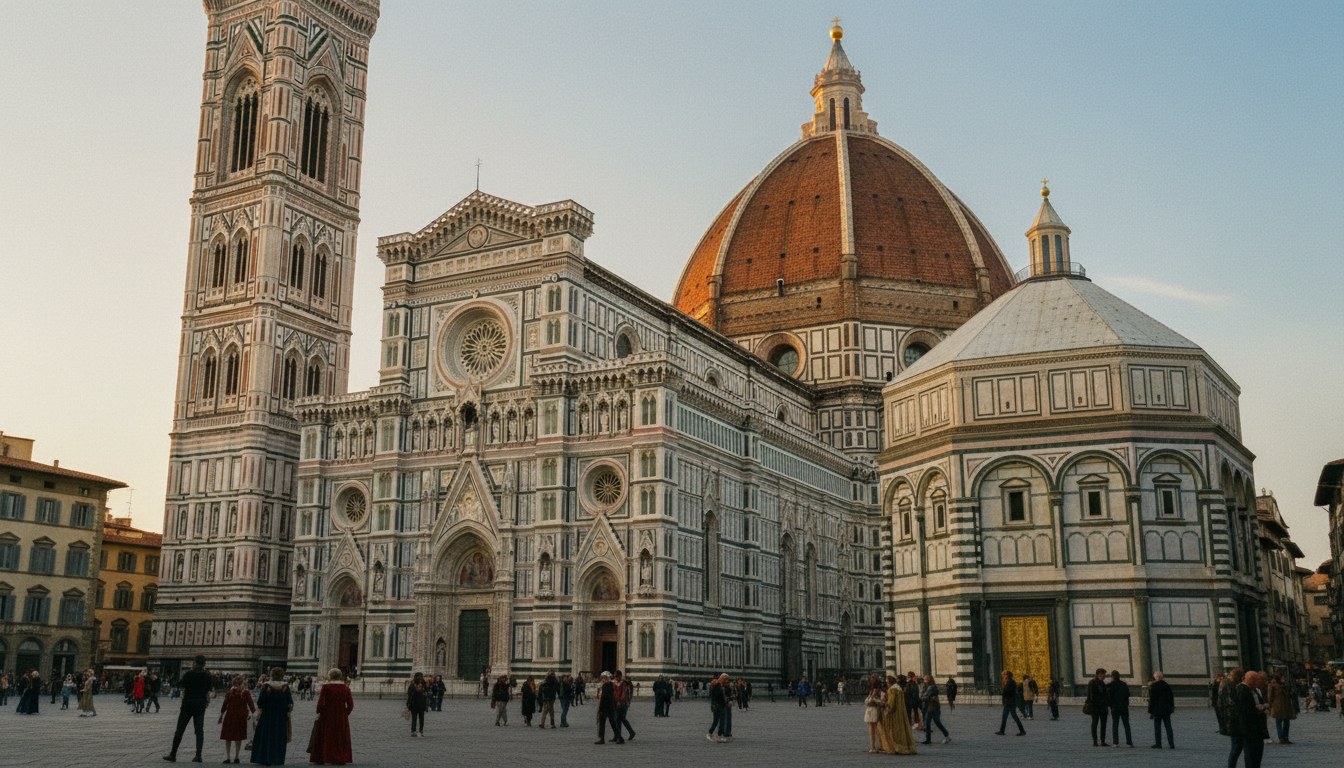
You arrive in the Piazza del Duomo in the 1400s. Brunelleschi's dome is rising over the cathedral of Santa Maria del Fiore, the largest dome built since Rome's Pantheon. The air carries linseed oil and fresh plaster from the workshops. This is the scene. You can turn around, walk left, walk right, and the world turns with you.
The characters are placed in this same scene. They are not floating over it. They are of it. When Cosimo talks about the dome, he is talking about the dome you are both looking at.
Cosimo gives the tour
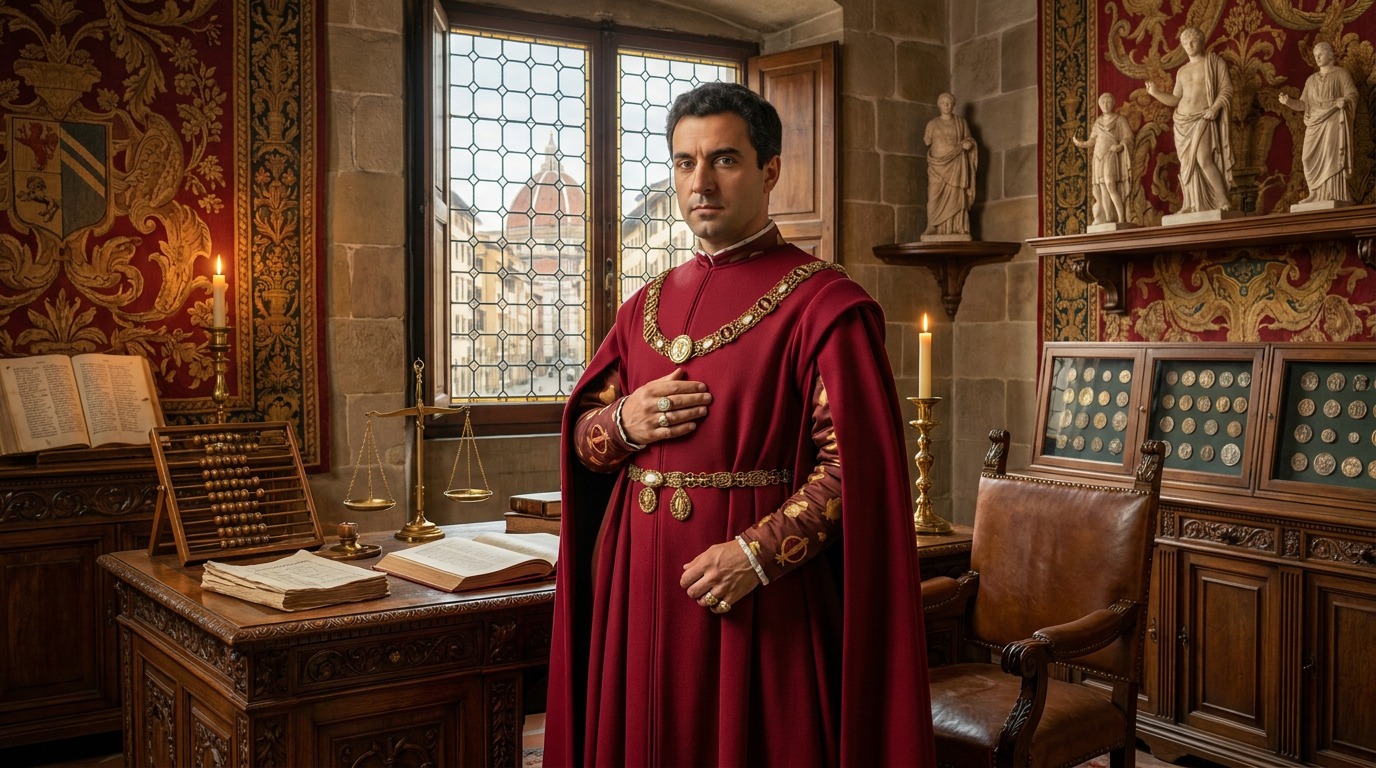
Cosimo de' Medici
Head of the Medici Bank, age 50
I tapped Cosimo's avatar and asked him to show me around. He did not give me a Wikipedia summary. He gave me a tour from where he was standing:
"Breathe in the scent of stone and oil; this is the perfume of a city awakening. Look up, traveler. The dome. Brunelleschi's great work, the largest since the Pantheon itself, and it is not finished yet. Every florin I pour into this city is a seed, and cathedrals are what grow. Turn around. The workshops. That is where the future is being carved, not in my counting house. Come, walk with me."
He told me to look up. I looked up. The dome was there. He told me to turn around. I turned around.
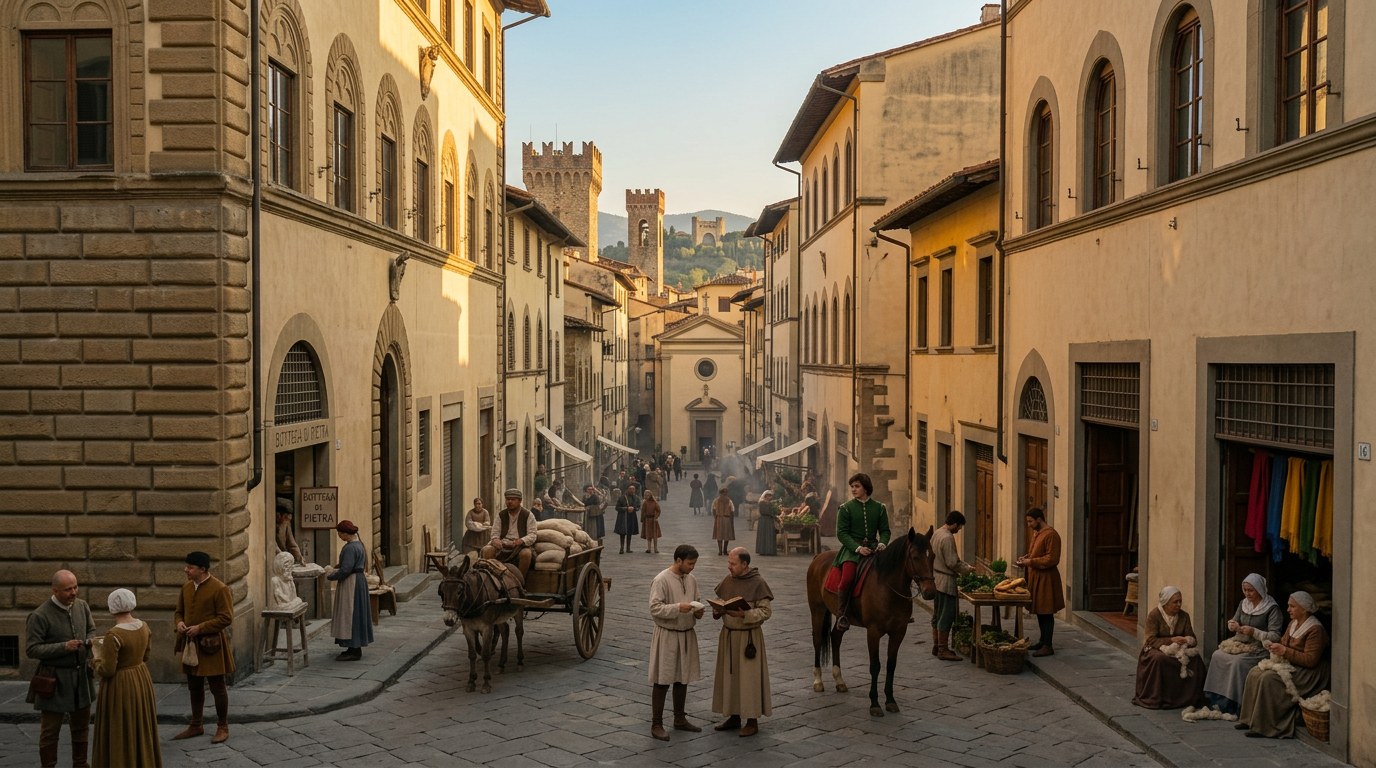
The workshops were there. This is the part that is easy to underdescribe: the character is not narrating a scene from a script. He is responding to the same scene you are both standing in. When you turn the view, the world he references turns with you. He sees what you see.
He knows who else is here
Here is where it gets interesting. I asked Cosimo who else I should meet. He did not give me a generic list. He named the people in his scene, and he had feelings about them:
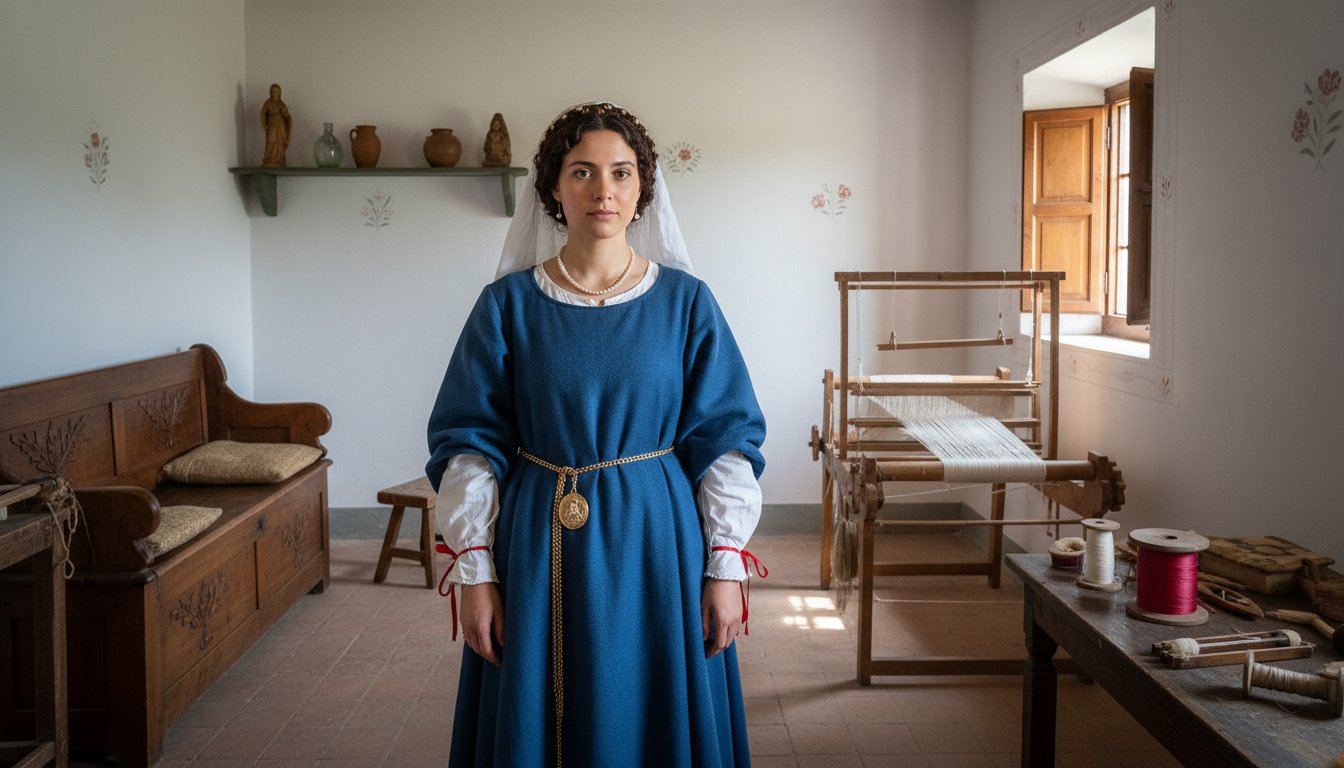
"There is a boy in the bottega, Michelangelo, no more than twenty. He believes God trapped forms inside the marble and that his chisel sets them free. A poet's notion, but the boy can carve, I will grant him that. My patronage put him there. And in the textile quarter, a woman named Margherita works the loom. She makes the cloth that pays for the marble that boy chips at. She does not know it, but her weave and his chisel are the same enterprise. Speak to her if you want to know what Florence costs the people who build it."
Michelangelo and Margherita are not background dressing. They are the other characters in this pack. Cosimo knows them by name, by role, and by the relationship he has with each. He has a view on Michelangelo's art. He has a view on Margherita's labor. And he can send you to either of them, and when you go, they will know you have been talking to him.
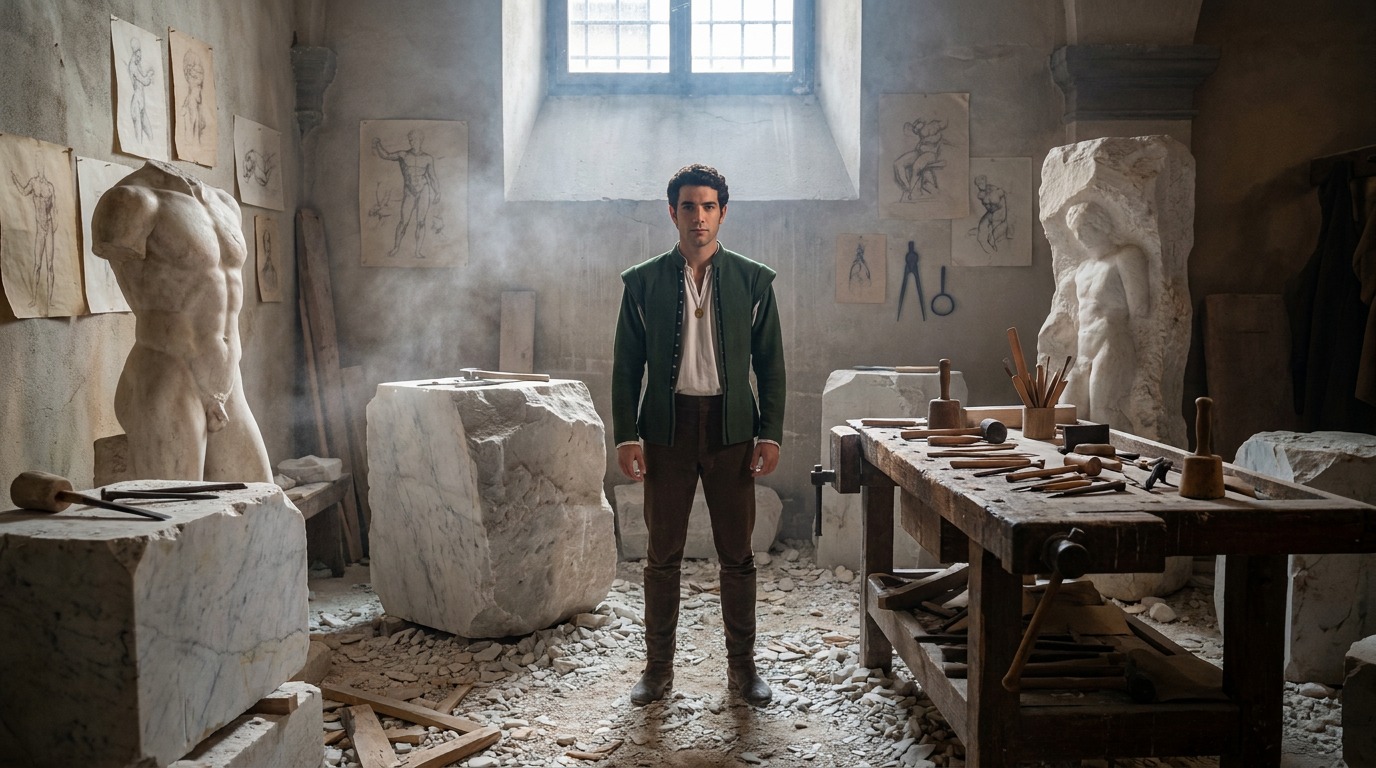
Michelangelo Buonarroti
Sculptor and Painter, age 20
Margherita
Textile Worker, age 25
They remember who you have spoken to
I walked over to Michelangelo. I did not introduce myself. I just asked him about the marble. He answered, and then he said:
"You have been speaking with Cosimo. I can tell by the way you ask about patronage before you ask about the stone. What did the old banker tell you? That he made me? Many men have said that. The marble disagrees."
He knew. Not because I told him. Because the characters in a pack are aware of each other, and the system carries the thread of who you have spoken with. Michelangelo has his own view of Cosimo, and it is not Cosimo's view of himself. The patron sees a prodigy he discovered. The sculptor sees a man who claims credit for what the stone does. Both are in the same piazza. Both are describing the same relationship from inside it.
What is actually happening under the hood
A few things have to be true for this to work, and most chatbot "characters" get them wrong.
The character is placed in a scene, not floating above one. Each location in Airtrek is a scene with views you can turn through. The character is loaded against that scene. When Cosimo says "look up at the dome," the dome is the one rendered in front of you. He is not reading from a description; he is responding to the same world you are moving through.
The character knows the other characters in the pack. When Cosimo is given his voice, he is told who else is in this scene, their roles, their expertise, and his relationship to each. He can reference them by name, send you to them, and react when you have spoken with them. They are not separate chatbots who happen to share a theme. They are a cast who share a world.
The character is era-locked.Cosimo only knows the 1400s. He does not know about America, or electricity, or the internet. He knows what a Florentine banker in his time would know. The only entity in Airtrek who can move across eras is Lyra, your modern guide. Everyone else is stuck in their own time, which is exactly the point.
Each character has a different perspective on the same world. Cosimo sees patronage as duty and power. Michelangelo sees it as a means to free the form God hid in the stone. Margherita sees the wealth it produces and the labor it costs. Three characters, one piazza, three different Florences. That is not a bug. It is the design.
Why this is different
An avatar is a costume a chatbot wears. Airtrek characters are not wearing costumes. They are placed in a world, aware of what is in it, aware of who is in it with them, and constrained to the time they actually lived. When one of them gives you a tour, they are pointing at real things in the scene you share. When they send you to someone else, that someone else knows them, and has an opinion about them.
That is what makes it feel like visiting a place instead of querying a database. The dome is over your head. The banker is beside you. The sculptor is in the workshop he pointed you to. And the weaver is in the quarter he told you to go see, ready to tell you what Florence costs the people who actually build it.
Go meet Cosimo, Michelangelo, and Margherita for yourself at airtrek.ai. And read more about how the system works at How Airtrek Creates Immersive Historical Experiences.
Kelly T. Hohman is the founder of Airtrek AI, the world's first AI-powered virtual time machine.