
POV: You Used Your Selfie to Enter Imperial Rome
I uploaded a selfie. A few seconds later, I was looking at myself as a citizen of Imperial Rome.
Not a filter. Not a cartoon. A portrait, styled to the clothing, the setting, the visual language of early 2nd-century CE Rome. I was standing in the scene. The Forum behind me. The toga on my shoulders. My face, but in a world two thousand years away.
This is the moment Airtrek changes from something you read about to something you're in.
The arrival
You pick an era. I picked Imperial Rome, 110 CE, under Emperor Trajan. You arrive in a 3D rendered version of the city: the Forum, the harbor, the hills, the great halls. You can look around. You can turn the view. It's a place.
Then the selfie transformation happens. You upload a photo of yourself, and the image model generates a portrait of you as a person of that era , dressed appropriately, placed in the setting, styled to the period. Your face, their world.
The first time I saw it, I understood what "immersive" actually means. It's not a word. It's the feeling of looking at a portrait and recognizing yourself in a place you've never been.
Then you talk
The portrait is the door. The conversation is the room.
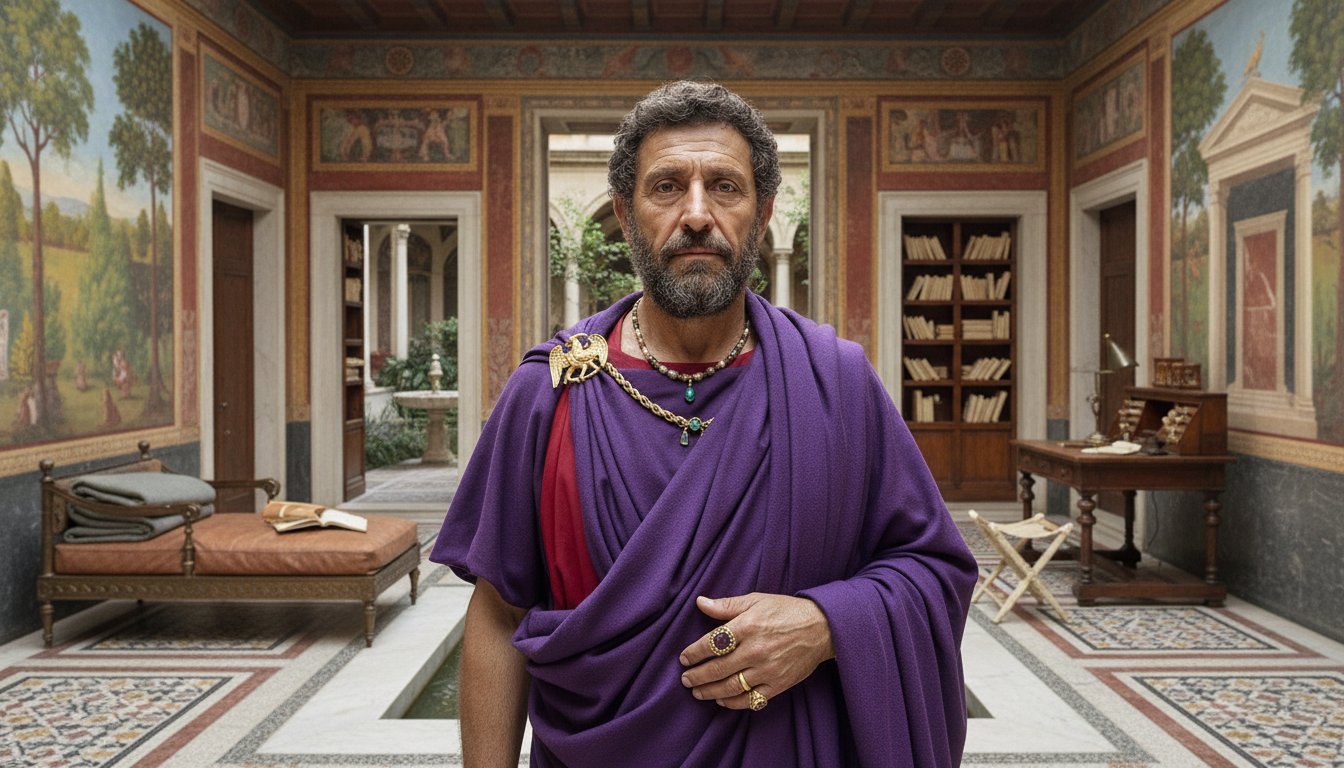
Marcus Aurelius Secundus
Roman Senator
I walked in, metaphorically, and met Marcus. A senator. Stoic. Fifty-two years old, served under three emperors. He asked me who I was and where I came from, in the formal way a patrician would address a stranger. I asked him what he thought of Trajan's building projects. He answered like a man who has watched emperors come and go, and who measures them by what they build rather than what they say.
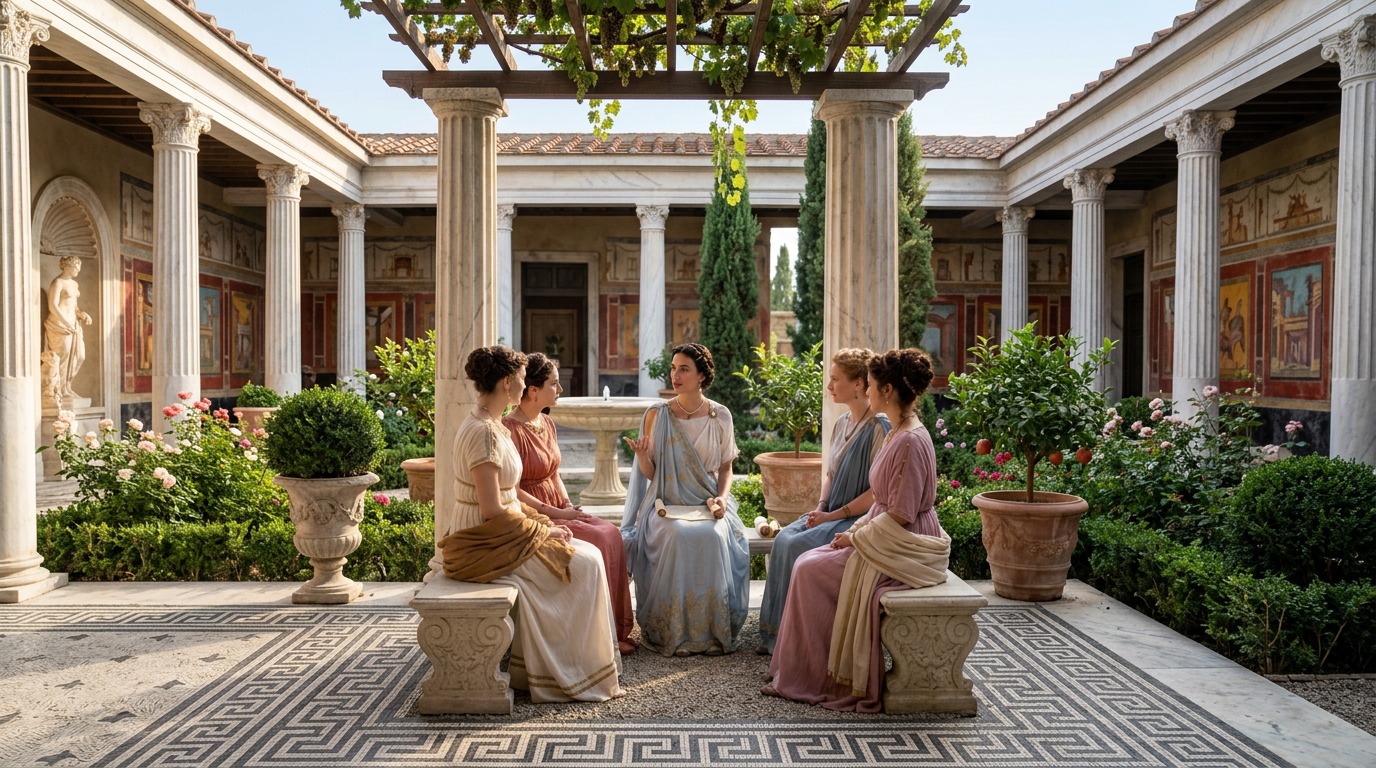
Julia Petronia
Roman Noblewoman & Hostess
Then I met Julia. Twenty-two. Hosts the best dinner parties in Rome. Reads Greek philosophy, which, she noted, is not something everyone thinks a woman should do. She looked at my portrait, looked at me, and said something like: "You arrive in strange clothing. Where I come from, that would raise questions. But you are a guest, and guests are owed courtesy. Sit."
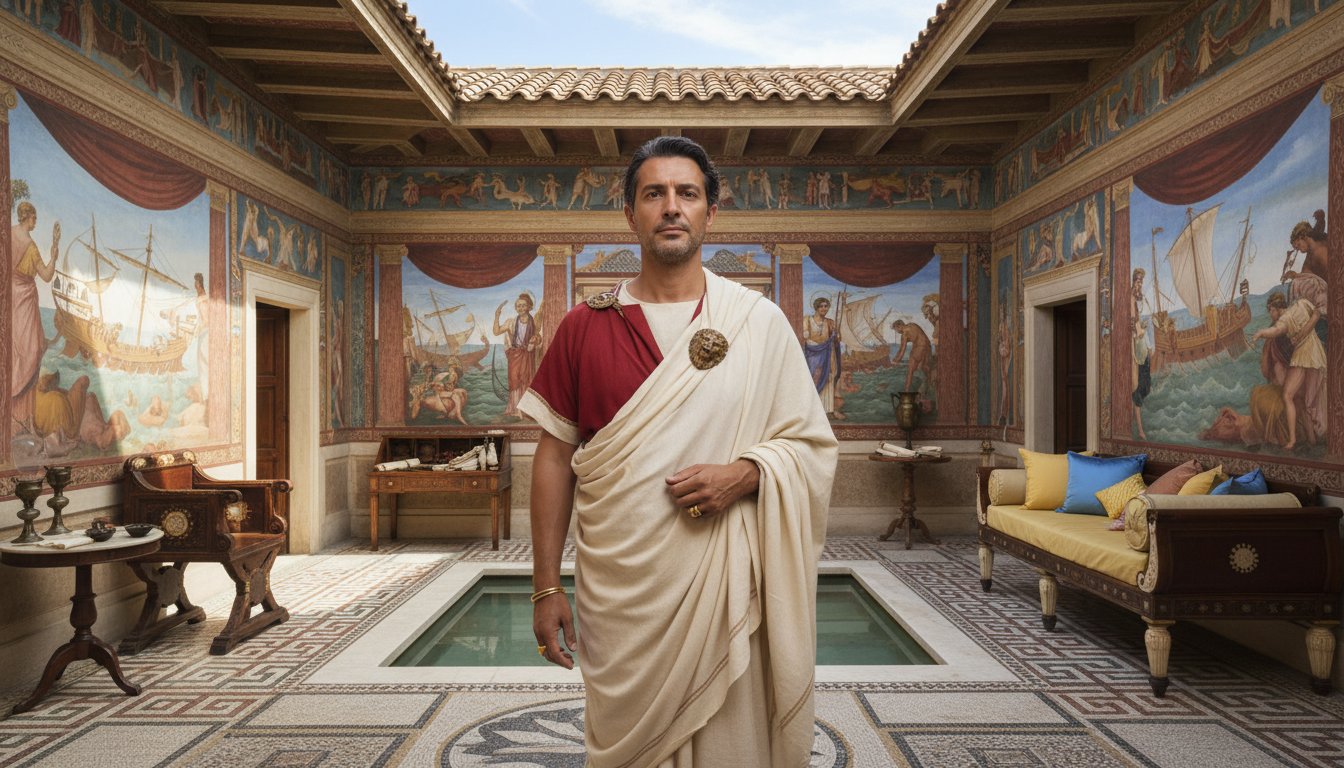
Gaius Petronius
Wealthy Merchant
Then Gaius. A merchant. Born to a freedman who worked the docks at Ostia. He didn't ask me anything polite. He asked me what goods I dealt in, because he'd traded in every port from Ostia to Alexandria, and he wanted to know what commerce brought me to Rome. "Tell me what goods you deal in," he said, "and I'll tell you what this city is really built on."
Three conversations. Three people. One city. And I was in it, not reading about it, not watching a documentary about it, but in it, with my own face on a Roman body, talking to people who saw me as a stranger who'd arrived from somewhere they couldn't quite place.
What the selfie actually does
It's worth being precise about this, because "AI selfie transformation" can mean a lot of things.
The portrait is generated by an image model that takes your selfie and styles it to the era, clothing, setting, lighting, composition. It's not a forensic reconstruction of what you "would have looked like" as a Roman. It's a creative transformation: you, rendered in the visual language of that time and place.
Your raw selfie is stored encrypted on your device. It's not uploaded as plaintext. The portrait that gets generated is a separate image. You can delete both. (See How Airtrek Works for the privacy details.)
The portrait's job is not to be historically accurate to your face. Its job is to make the past feel like a place you arrived in, so that when Marcus asks you who you are, you're answering as someone who's there, not someone who's reading about there.
Why this matters
There's a difference between learning about the past and being in it. A textbook tells you what a senator thought. A documentary shows you what a forum looked like. Airtrek puts you in the forum, with your own face, and lets a senator ask you a question.
The selfie is the mechanism that bridges "learning about" and "being in." It's the thing that makes the past feel like a place rather than a page.
And once you're in, the people you meet are not one narrator summarizing the era. They're a senator, a noblewoman, a merchant, each with their own view of the city you're standing in. The portrait gets you through the door. The conversations are why you stay.
Kelly T. Hohman is the founder of Airtrek AI, the world's first AI-powered virtual time machine.