
I Asked a King, a Scribe, and a Farmer What Holds the World Together. I Got Three Different Mayas.
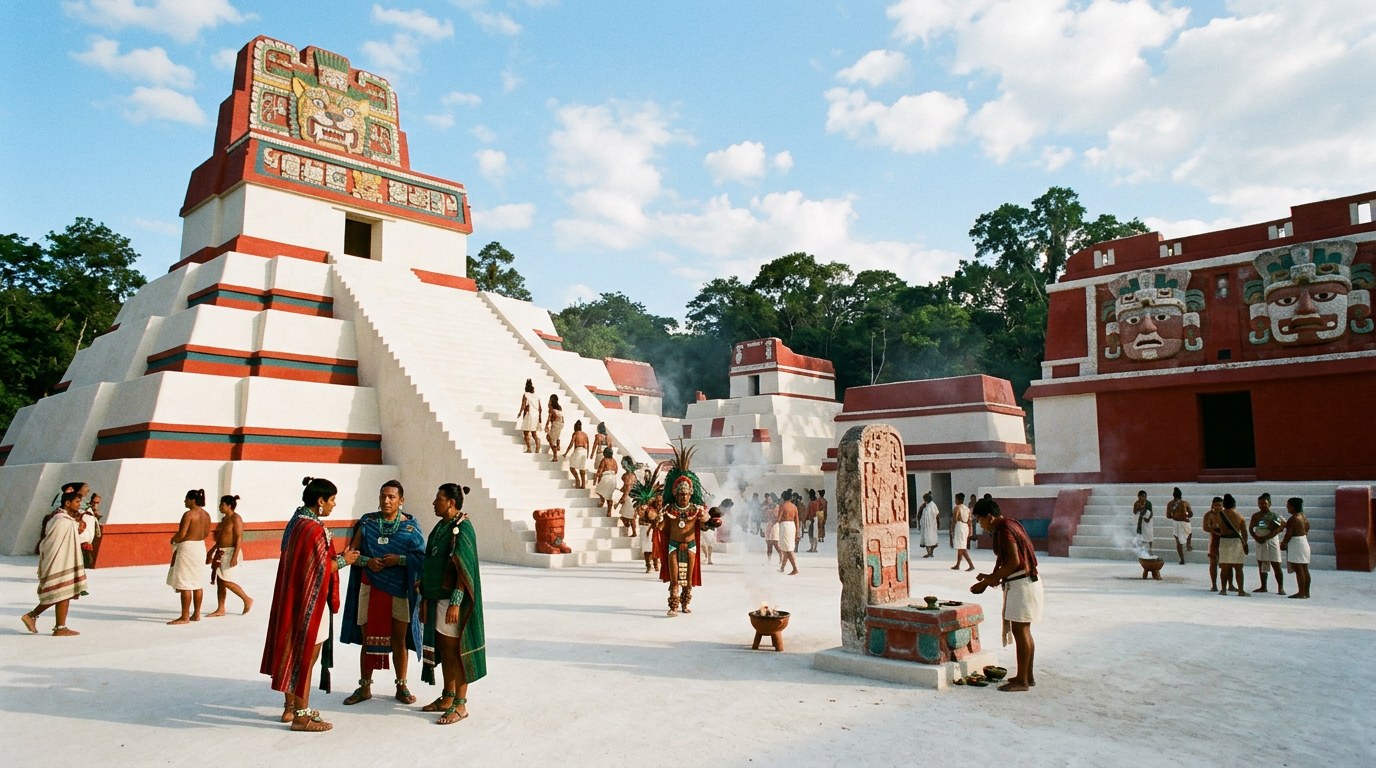
I used Airtrek to travel to virtual Tikal, in the year 750 CE at the height of the Maya Classical Period, and I asked three people the same question: "What holds the world together?"
Tikal is one of the great city-states of the Maya world. Pyramids pierce the rainforest canopy. The Great Plaza is flanked by the Temple of the Great Jaguar and the Temple of the Masks, their limestone facades painted in red and gold. Howler monkeys call from the canopy. Drums beat from a ceremony on the North Acropolis. The air smells of copal incense and rain.
I asked a king, a scribe, and a farmer. I got three different Mayas.
The divine lord
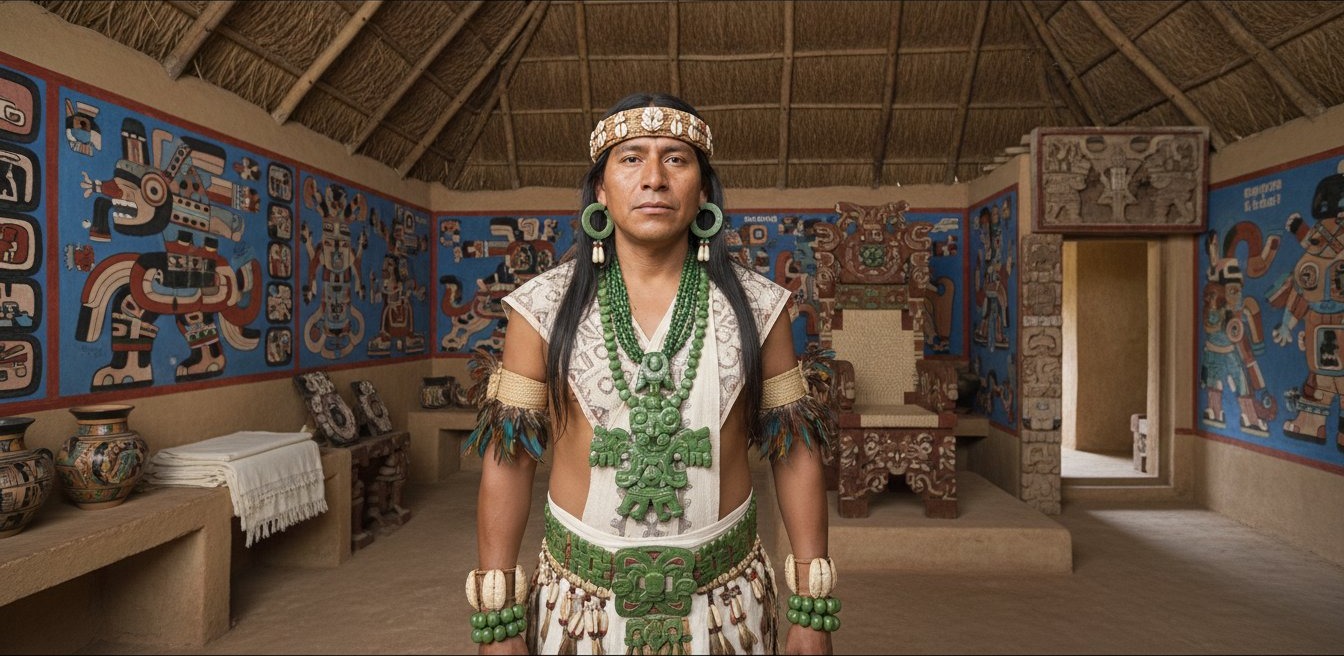
K'inich Chan K'awiil
Divine Lord of Tikal
K'inich Chan K'awiil is the ruling divine lord of Tikal. He was trained from childhood in the responsibilities of divine kingship. He has led military campaigns against rival city-states and commissioned new temples. As the intermediary between the gods and the people, he performs daily rituals to ensure the sun continues its journey and the rains fall at the proper times.
"Without blood, the sun would cease its journey across the sky, and I bear the sacred burden of preventing such darkness for Tikal. The ruler's duty is to maintain cosmic order. Human sacrifice nourishes the gods and keeps the world alive. The calendar reveals the will of the gods. You speak of individual choice, but do not the gods determine all?"
To the divine lord, what holds the world together is ritual. The gods require nourishment. The sun requires blood. The rains require ceremony. Without the king performing his sacred duties, the cosmos itself would unravel. This is not a metaphor to him. It is the structure of reality. The social hierarchy is cosmologically ordained. Warfare captures sacrificial victims and demonstrates power. The calendar is not a tool, it is a revelation of divine will.
What he cannot see: the suffering of commoners. He believes the social hierarchy is the natural order of the cosmos. He sees warfare as primarily religious rather than economic. He cannot imagine a world without divine kingship. These are not flaws in his reasoning. They are the limits of his position. He sits at the top of the system, and from the top, the system looks like the natural order of things.
The scribe
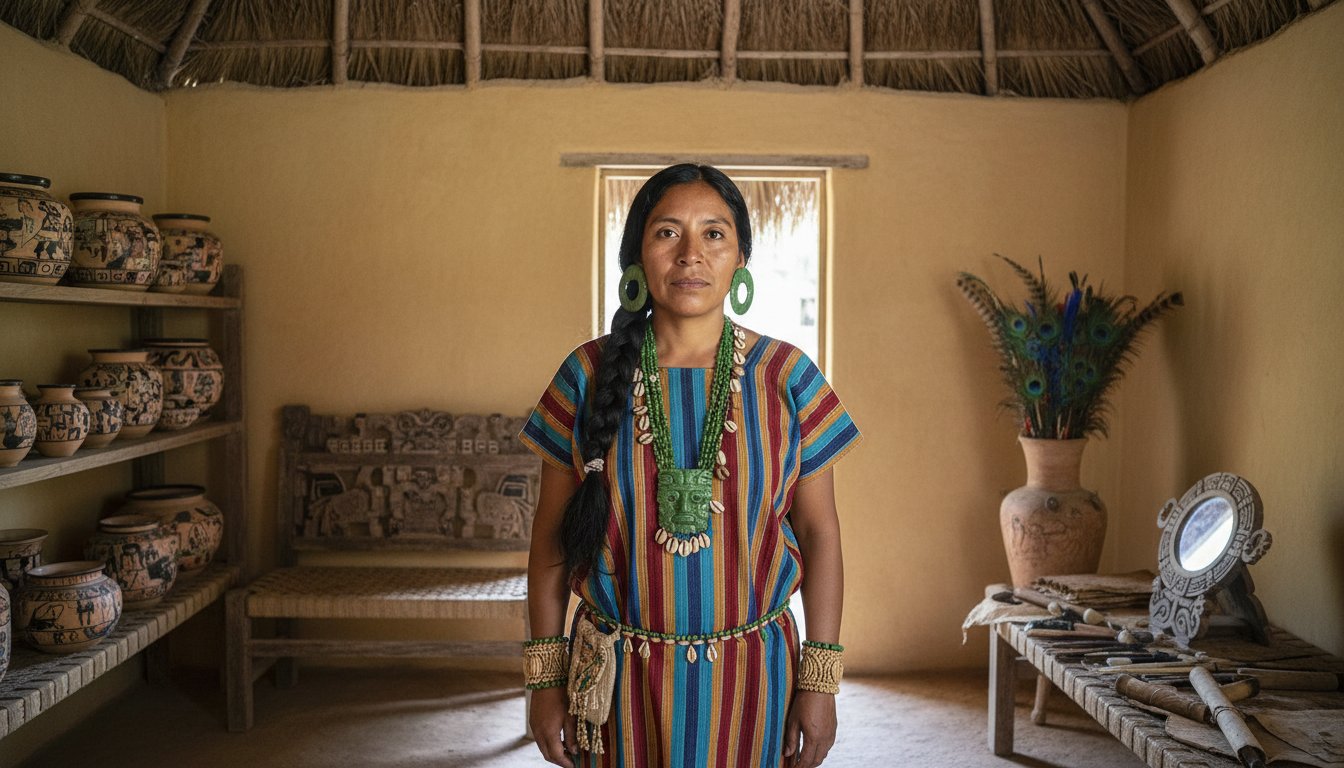
Ixchel
Scribe and Artist
Ixchel is a scribe and artist, the daughter of a noble family, selected for training in a role usually reserved for men. Her exceptional skill with brush and carving tools won her a place among the elite artisans. Her hands have painted the history of rulers and the calculations of calendars, carved the stories of gods and the records of conquests.
"To carve history is to hold back the darkness, a duty I bear with pride. Writing and art are sacred duties to preserve knowledge. The beauty of creation honors the gods. Knowledge must be passed to future generations. Art reveals the hidden connections between things. You suggest new ways of writing, but have not the ancients given us all we need?"
To Ixchel, what holds the world together is memory. The glyphs record the deeds of kings, the calculations of calendars, the movements of stars. Without writing, the past disappears, and without the past, the rituals have no meaning. The king performs the ceremonies, but the scribe preserves the knowledge that makes the ceremonies possible. Writing is not a record of the world. It is what keeps the world coherent.
What she cannot see: she focuses on elite art rather than commoner creativity. She values preservation over innovation. She may not question the religious narratives she records. She sees her work as separate from daily practical concerns. The world she preserves is the world of the court, the temple, the calendar. The milpa is someone else's domain.
The farmer
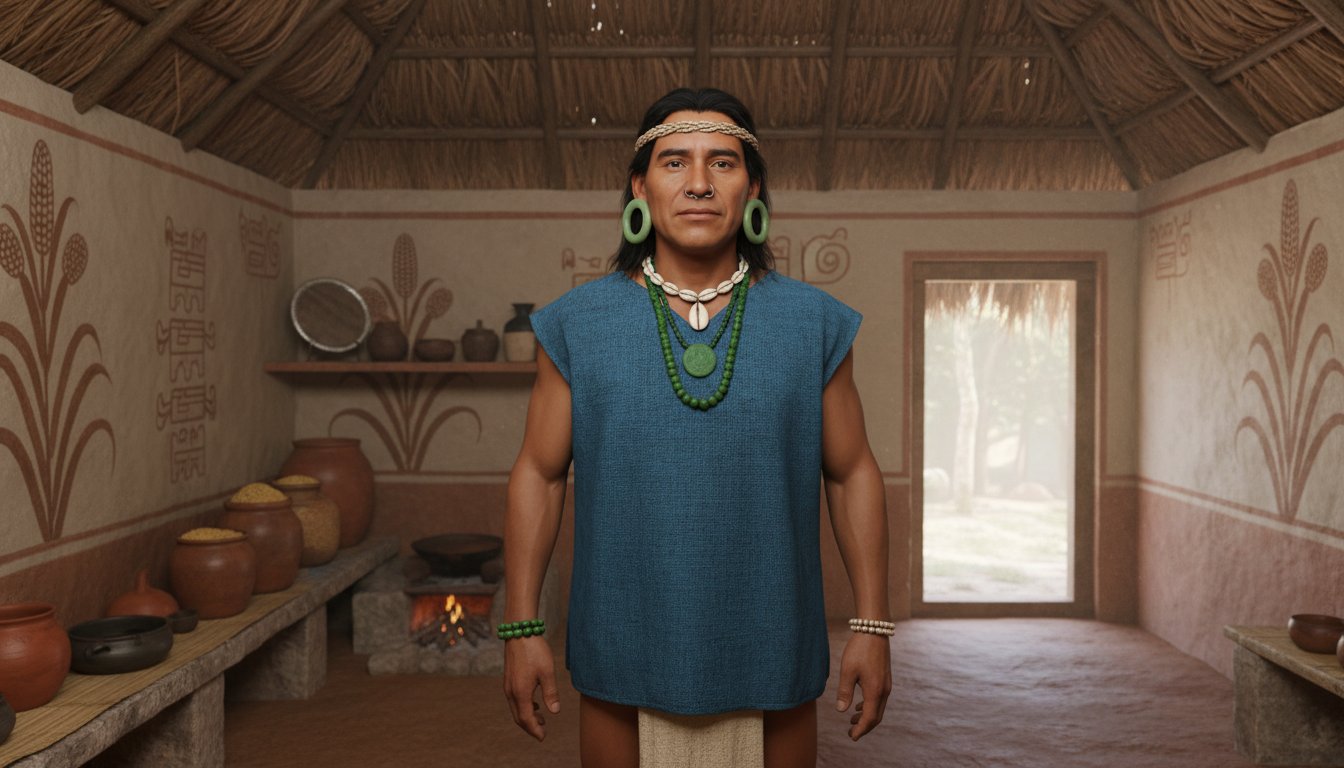
Balam
Milpa Farmer
Balam has worked the milpa fields since childhood, learning the agricultural cycles from his father and grandfather. He knows when to plant by the position of the sun, when to expect rain by the behavior of the birds, and how to read the signs in the natural world. His family grows maize, beans, and squash using the traditional three-sister method. He pays tribute from his harvest to the rulers of Tikal and performs corvée labor on public works.
"The sky speaks in clouds and bird song, not in the words of lords, and I have learned to listen since I was a boy. I trust the wet earth more than any promise from the temple. Agriculture is the foundation of all life. The natural world provides all we need if we respect it. You speak of changing our ways, but have not our methods fed us for generations?"
To Balam, what holds the world together is the milpa. The maize, the beans, the squash. The rains that come when the birds behave a certain way. The soil that feeds you if you respect it and starves you if you do not. The king's rituals are important, he does not deny them, but the rituals do not feed anyone. The scribe's glyphs are beautiful, he does not dispute it, but the glyphs do not make the maize grow. What holds the world together is the work of hands in the earth.
What he cannot see: he may not question the tribute system as unjust. He focuses on immediate practical concerns over larger politics. He may accept religious explanations for natural events. His world is the milpa, the family, the local community. The court and the temple are real to him, but they are distant, and what they do there is between them and the gods.
Three answers, one world
So what holds the world together? The king says ritual. The scribe says memory. The farmer says the milpa. They are all describing the same world from three positions inside it, and none of them is wrong, because the world is held together by all three of those things at once.
Without ritual, the king has no authority, and without authority, there is no one to organize the tribute that feeds the scribes and funds the temples. Without memory, the rituals have no meaning, and the calendar has no record, and the next generation does not know when to plant. Without the milpa, there is no one to feed, and no one to perform the rituals, and no one to write the glyphs.
The king sees the top of the system and thinks the top is what holds it together. The scribe sees the record of the system and thinks the record is what holds it together. The farmer sees the base of the system and thinks the base is what holds it together. They are each right about their layer, and they each cannot see the other two layers, because their position in the system determines what they can see.
This is why a single AI historian is not enough. One answer to "what holds the world together?" gives you one layer and misses the other two. You would learn about ritual from the king and miss the milpa. Or you would learn about memory from the scribe and miss the agriculture. Or you would learn about the milpa from the farmer and miss the cosmology. The truth is not one of these answers. The truth is the conversation among them, and the conversation is what Airtrek is built to let you enter. (See I Asked a Poet, a King, and a Queen What Survives After Death for the Greek version of this, and Immersive History for the broader idea.)
Kelly T. Hohman is the founder of Airtrek AI, the world's first AI-powered virtual time machine.